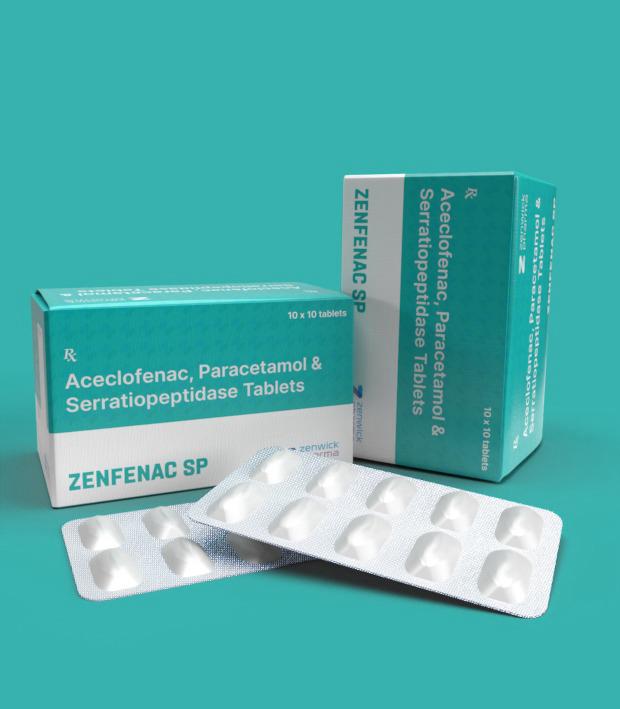
COMPOSITION
Each film-coated tablet contains:
Aceclofenac ... 100 mg
Paracetamol ... 325 mg
Serratiopeptidase ... 15 mg
Excipients ... q.s.
CLINICAL PHARMACOLOGY
Aceclofenac is a non-steroidal anti-inflammatory drug (NSAID) with analgesic and anti-inflammatory
properties. It works by inhibiting cyclooxygenase (COX) enzymes involved in prostaglandin synthesis.
Paracetamol is an analgesic and antipyretic that acts primarily on the central nervous system.
Serratiopeptidase is a proteolytic enzyme with anti-inflammatory, anti-edemic and fibrinolytic activity,
enhancing tissue repair and absorption of inflammatory exudates.
INDICATIONS AND USAGE
Used for the management of pain and inflammation in:
- Osteoarthritis
- Rheumatoid arthritis
- Ankylosing spondylitis
- Dental pain
- Postoperative inflammation and trauma
CONTRAINDICATIONS
1. Hypersensitivity to Aceclofenac, Paracetamol, Serratiopeptidase, or other NSAIDs.
2. Active peptic ulcer or gastrointestinal bleeding.
3. Severe hepatic or renal impairment.
4. Pregnancy (especially third trimester) and lactation.
PRECAUTIONS
- Caution in patients with liver or kidney disorders.
- Avoid concurrent use with other NSAIDs or hepatotoxic drugs.
- Monitor liver function if used for prolonged periods.
- Not recommended in children without medical advice.
DRUG INTERACTIONS
1. Increased risk of bleeding with anticoagulants.
2. Enhanced hepatotoxicity with alcohol or other hepatotoxic drugs.
3. May reduce efficacy of antihypertensives.
4. Potential interaction with methotrexate and lithium.
PREGNANCY & LACTATION
- Not recommended during pregnancy and lactation.
- Use only if clearly needed and prescribed by a physician.
DOSAGE AND ADMINISTRATION
- One tablet twice daily after meals or as directed by the physician.
- Do not exceed the recommended dosage.
ADVERSE REACTIONS
- Common: Gastric discomfort, nausea, vomiting, dizziness.
- Uncommon: Skin rash, headache, drowsiness.
- Serious: Gastrointestinal bleeding, hepatic dysfunction, allergic reactions.